Our students created some digital posters to express their opinions about the greatest achievements ever. What's the greatest achievement for you? Leave us a comment on your views, please!
Pablo and Berenice's poster
Iara and Anelisa's Poster
Camila and Bianca's Poster
Martina and Lila's Poster
Sara and Malena's Poster
Joaquín and Ignacio's Poster
Mirko and Oriana's Poster
Our Own Content Creators
Did you know that our FCE students have been working hard at Multimedia this year? You didn't? Well, let me tell you a little bit about what they have been up to.
This year, our FCE students have been experimenting with the use of some online tools to create their own content to be shared on the web. Would you like to take a peek at their creations? Don't miss this post or the upcoming ones!
Our Own Content Creators: Part 1
This post features the works by FCE B and FCE J
Check out the Fakebook profile they created for some celebrities by clicking on each image below!
Iara and Belén
Lucía
Martín and María
Anonymous
Agustina Heiz
Constanza
Valentino Casadidio
Martín Roberti
Agustín Fernández
Look who's writing stories!
The Sound of Silence
Project by CAE“B”(Teacher: Mariana De Biassi)
The trigger for the present work on the concept of silence was an article in “Advanced Expert” about Foley artists, sound artists that mimic the actual sound sources of films in a recording studio. The text was packed full of verbs that describe sounds and actions, the exact meaning of which can be understood only by listening to and producing the actual sounds or doing the actions that cause them.
For want of a “film” Foley session, we organised a “story telling” Foley session. The story chosen was “The Sound of Silence” by Katrina Goldsaito.
As a first step, pages of the story were handed out to pairs of students in random order. After reading them carefully and deciding what part of the story their bits belonged to (beginning, middle or ending) they interacted with their classmates in an attempt to put the story together, which they succeeded in doing although not without effort!
Once the story had been rebuilt, in pairs they focused on their bits of the story and thought of the sounds and noises that would illustrate those scenes. After some rehearsal, which involved one student reading and the other one providing the background noise or sound, they were ready to record the session.
After the session, the class reflected on the Japanese concept of ma, the silence in the spaces between sounds, and on the title of the story “The Sound of Silence”, which reminded some of the students of the song by Simon and Garfunkel.
Constanza and Agustín, who had already delighted us with their musical skills, played the song “The Sound of Silence” for us.
Following their amazing performance, we proceeded to analyze the lyrics of the song. The class arrived at the conclusion that the concept of silence in the song contrasts strikingly with that of ma, the Japanese concept. To get the essence of the song, groups of students analysed different stanzas and summarised each of them with the feeling they inspired.
Finally, the project was rounded off with personal answers to the question “What does silence mean to you?” Take a look at this Padlet wall (click on the posts to access a full view):
Four Corners and One Video
This project is the result of CAE B students' work with the song "Seven Years" by Lukas Graham. As a warm up, they did an activity called "4 corners", which involved walking to the corner of the room representing their favourite age (4 pieces of paper with the numbers 11, 20, 30 and 60 were posted in each corner of the room). In groups they brainstormed the reasons why that was their chosen age and then shared their ideas with the rest of the class.After watching the video of the song, I asked them to go home, look for a photo of their childhood they would like to share with their classmates and think of three or four lines to explain their feelings about the photos. I told them to imitate the rhyming patterns of the song, so that the descriptions would resemble short poems. Some weeks later they brought their work to class, passed the photos round and read their poems. As a follow-up, I suggested making a video of their photos and poems with "7 years", the song that inspired their work, playing in the background. The video was compiled by Uriel Palacios, who is an expert in visual arts.
Mariana De Biassi
Look how ARCI students are finding themselves and losing themselves with Art!
Our Post FCE Poets
This
year we read the short story called DAZZLER, and as a follow-up
activity I invited my students to write a haiku summarising their
understanding of the story.
A
haiku is a Japanese poem which consists of three lines, with the
first and third line having five syllables, and the middle line
having seven.
These
poems are very short and try to capture a feeling or an image, many
times connected to the natural world.
My
students are very hard-working and creative, but they are not very
fond of following rubrics, so they wrote haikus on the topics they
pleased, and I would like to share them with you because, as they
said, it’s not easy to write a haiku, and some of their productions
are very profound, and some really light-hearted.
Although
some of them do not follow the convention 5-7-5, they
do have one of the features of haikus: they condense an idea, a
feeling, an emotion, in just a few words.
We
hope you like them.
Life
is very brief
play,
kiss, love, make friends, enjoy
before
it all ends.
by
Marta Serra
Lost
in the forest
scared
without a hope in hell
found
way to nanny.
If
youthfulness knew
and
old-age could:
what
world this would be!
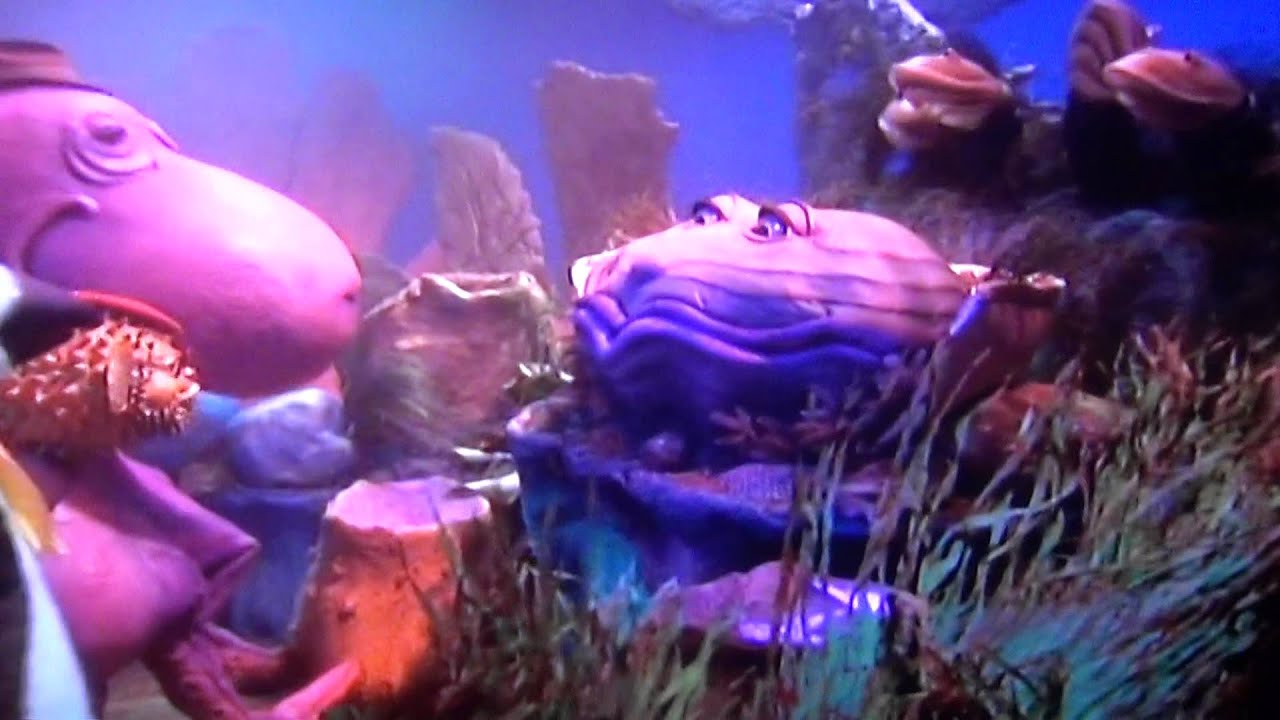
At
night on the beach
clams
make nice love
clacking
and clashing.
If
to teach is to touch,
when
you gently touch my soul
I
do learn I am.
by
Raul Antonio Coll
Teacher: Alicia Zuliani
Class: Post FCE
Our CAE "C" Art Fans
I started the project by introducing students to the subject of art. I gave them a
questionnaire about how sensitive they were to art and they had to fill in the
questions with phrasal verbs which we were dealing with at the time. Next, they had
to discuss the questions in pairs, then as a class and finally, I told them they might do
something in connection to the subject. I used Padlet to display my students' work,
and it was a great success!
If you cannot see the display properly, please follow this link:
One
of the units of Objective Advanced, the book we have been using at
ARCI, is about speeches. It begins with a reading exercise of an
extract of Martin Luther King’s famous
speech “I Have a Dream.”
As
a follow-up, the book suggests an activity that consists of a debate
on a current issue in teams and a presentation of the teams’
conclusions.
Issues
Designing Project Activities
I felt the debate needed some scaffolding and students needed information as well as specific vocabulary about their chosen issues.
That
is why, after organizing themselves in teams of 4/5 students and
deciding what issue they would address (it could be one of the issues
suggested by the book or one of their own), I gave them a week’s
time to browse the web to complete this worksheet:
After
the discussion, the book suggests that teams report back to the rest
of the class through a presentation by an appointed spokesperson.
Conducting Project Activities
However,
I felt that
the information discussed could be further processed and made into a
multimedia presentation in which all the members of the team had a
chance to contribute.
That’s
why I invited each team to prepare a presentation about their issue
along the following guidelines:
length:
8 – 10 minutes
use
of multimedia resources: beamer, powerpoint, youtube (or any other)
videos, music, photographs, etc.
participation
of all
the members of the team
We
set dates for the different presentations and I encouraged them to do
their best as they would be evaluated by their peers.
Project Outcomes
Watch part of the presentations in the following video.
Evaluation
During
the presentations, the rest of the class had to complete the
following summary and assessment grid:
The
purpose of the summary and the evaluation was to make sure the class
would profit from the presentations and not just listen passively. As
well as this, the score system turned
the whole activity into a competition, which hopefully would motivate
students even further.
After
the discussion, we held a humble awards ceremony during which I
revealed the results of their assessment.